When “Dinner Time” Doesn’t Exist: How to Stop Cooking in Separate Shifts
Different schedules, different appetites, and no clear dinner time? These flexible, low-stress meal ideas help you feed everyone—without cooking in separate shifts.
Oakwood Daily Team
By Oakwood Daily Team
Published at: 17/01/2026

When Dinner Stops Being One Moment
There’s a point in most homes where dinner quietly stops being a shared time.
One person eats early. Someone else is late from work. Another isn’t hungry yet. And somehow, you end up cooking—or reheating—in small, separate rounds.
It’s not dramatic. It just becomes… tiring.
Not just the cooking, either. It’s the microwave going again just as you sit down. The plate you’ve just washed being replaced by another. The feeling that the kitchen is never quite “done.”
On evenings like this, the question shifts.
Not “what’s for dinner?”
But “what will actually work across the whole evening?”
The “Help Yourself” Setup
This is less about serving dinner and more about setting it up once.
Food that can sit comfortably or be reheated without falling apart works best here:
Rice with something simple alongside
Roasted vegetables with sausages or chicken
A tray of food that can go back in the oven if needed
Everything goes on the counter, and people serve themselves when they’re ready.
It takes the pressure off timing—and, just as importantly, keeps you from stepping back into the kitchen every half hour.
The Countertop Buffet
When everyone’s eating at different times and wants something slightly different, this tends to work better than anything structured.
Wraps, flatbreads, or baked potatoes laid out with a few fillings—cheese, leftovers, beans, whatever’s there.
Nothing fancy. Just options.
People build something for themselves when they’re hungry, and you’re not making separate meals over and over again.
The Pasta Fix (That Actually Works)
A big pot of pasta sounds like the obvious solution—but it rarely holds up. It cools, sticks together, and ends up needing rescuing.
A better approach is to keep the sauce warm—on the hob or in a slow cooker—and cook fresh pasta as people walk in. It takes ten minutes at most, and it tastes like an actual meal each time.
It’s a small shift, but it makes staggered dinners feel far less like leftovers.
Cook Once, Reheat Properly
Some meals are just better suited to this kind of evening.
Things like:
Shepherd’s pie
Lentil dahl
Pasta bake
They hold their texture, reheat well, and don’t rely on perfect timing.
You cook once, properly—and then just warm portions as needed.
It still feels like dinner, just spread out a bit.
The Picky Tea (And Why It Works)
Some nights don’t need a “proper” meal at all.
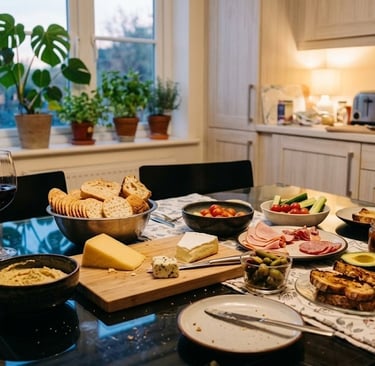
A bit of cheese, crackers, toast, something warm, whatever’s left in the fridge—what most people would call a picky tea.
No cooking. Minimal washing up. Everyone eats when they’re ready.
And on evenings where everything feels slightly out of sync, that’s often the easiest solution.
The Quiet Trick: Stop Chasing Perfect Timing
A lot of the stress comes from trying to get everyone to eat at the same time.
But when schedules don’t line up, that effort usually just creates more work—and more frustration.
Letting go of that expectation, even slightly, changes the tone of the whole evening.
Dinner doesn’t have to happen all at once to still feel like care.
A Small Shift That Helps: The 4 PM Pivot
If by late afternoon the evening already looks scattered, it helps to decide early.
Instead of holding onto a plan that needs everyone at the table, switch to something flexible before the rush begins.
It doesn’t need to be complicated—just something that:
reheats well
doesn’t dry out
doesn’t depend on timing
That one small decision often saves you from cooking the same meal three different times.
Final Thought
Feeding people at different times isn’t a failure of routine.
It’s just what real life looks like sometimes.
You don’t need to keep starting over in the kitchen to make it work.
You just need something flexible enough to carry the evening—and simple enough that it doesn’t wear you out.
A bit of everything, eaten whenever—some nights, this is what dinner looks like.
© 2026 Oakwood Daily. All rights reserved.