No One Warns You About This Part”: The Emotional Reality of the First Weeks With a New Pet
The first weeks with a new pet can feel overwhelming, messy, and unexpectedly hard. Here’s why—and how to settle into it without pressure.
Noor Arin
Published at: 08/04/2026

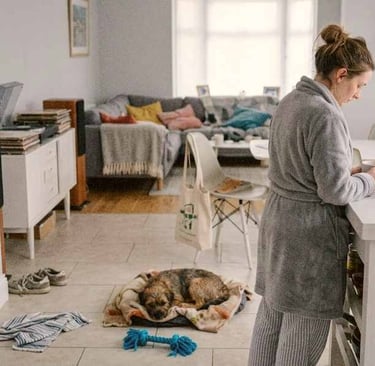
At 2am, in a dressing gown, in the rain, a new pet can make every sensible decision behind it look faintly ridiculous.
The puppy is sniffing a wet patch of grass with deep professional interest, but not doing the one thing you came outside for. The garden is cold. Behind you, the house has stopped feeling neutral. It is suddenly full of hazards: cables, chair legs, dropped socks, the corner of a rug you never previously had strong feelings about.
Inside, there is a bed you chose carefully, a bowl washed before use, and a bag of food researched with the seriousness usually reserved for mortgages.
None of that helps much now.
This is the beginning people rarely describe properly. It isn’t the first photograph or the soft announcement to friends. It certainly isn’t the neat idea of companionship. It is interrupted sleep, damp towels by the door, half-finished tea, and the strange vigilance of sharing your home with an animal who has not yet learned what the home is.
People talk about the joy of bringing a pet back. They say less about how odd it feels.
The house changes before the bond has had time to catch up. A baby gate cuts the hallway in two. Food bowls take over a corner that used to be empty. Shoes migrate upwards. Doors that once stayed open now click shut behind you. You stop drifting from room to room and begin checking surfaces, listening for silence, noticing what has gone missing.
The animal is adjusting, yes. So are you.
The early days are often imagined as instant domestic warmth: a dog asleep beside the sofa, a cat tucked into sunlight, affection arriving cleanly and on time. Sometimes it does. More often, the first weeks are mostly logistics.
Feeding. Cleaning. Redirecting. Googling at strange hours. Trying to work out whether a noise, smell, habit, or refusal is normal.
The disappointment can feel private because the decision was voluntary. You wanted this. You planned for it. Maybe you waited months. So when the thought comes — Have I made a mistake? — it lands with more force than it deserves.
Usually, it is not a verdict. It is just the mind catching up with the scale of the change.
There is money in it too, and worry. Vet appointments. Insurance tabs left open on a laptop. Food that seemed right until it didn’t. Training advice delivered with total certainty by people who disagree with one another. A chewed cable. A scratched chair. The small financial humiliations of caring for something that cannot understand a budget.
No single part is usually unbearable. The weight comes from accumulation. The care itself is one thing; the constant thinking is another.
In those first weeks, survival often looks unimpressive.
The world gets smaller. One or two rooms instead of the whole house. A safe place to put the animal while you stand in the kitchen and remember what quiet sounds like. A day counted not by whether it went well, but by whether there was one decent walk, one cleared surface, one stretch of calm.
Sometimes the most useful thing is ten minutes away from the situation. Tea. A closed door. The animal safe elsewhere. A return made possible by the small mercy of distance.
This is not failure. It is the shape of adjustment.
Bonding tends to arrive without drama. It comes through repetition, not revelation. They learn your footsteps. You learn the difference between mischief, fear, hunger, and boredom. Their moods become readable. Your hands become familiar to them. The house slowly stops treating them as an interruption.
Then one day, while the kettle boils, they lie down nearby.
Nothing announces itself. No grand emotional moment. Just a body on the floor, breathing evenly, as if it had always belonged there.
That is often the turn. Not instant love, not the tidy version imagined beforehand, but a quieter arrangement: shared space, learned trust, ordinary days.
The beginning is not always the best part. Sometimes it is the awkward toll paid before the life you pictured can actually begin.
Later, when the routine has softened and the house feels like itself again, you may not remember the exact moment things changed.
Only that the animal stopped feeling like a disruption.
And started feeling like home.
The quiet moment when things start to feel a little more settled — even if nothing is fully under control yet.
© 2026 Oakwood Daily. All rights reserved.