Why Meal Planning Feels So Hard (Even When You Know It Works)
Meal planning should make life easier—but often feels like a chore. Here’s why it’s harder than it looks, and how to make it work in real life.
Oakwood Daily Team
By Oakwood Daily Team
Published at: 10/04/2026
You Know It Helps—So Why Does It Feel So Much?
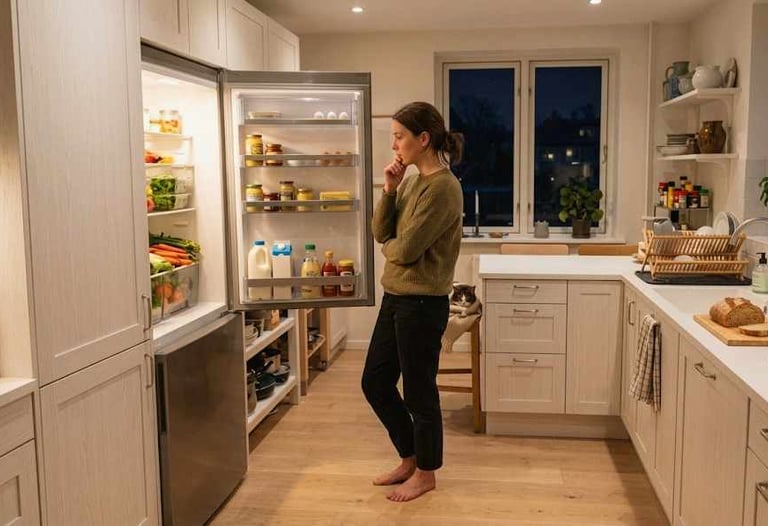
You’ve just finished a long day, the kitchen’s still slightly messy, and you’re trying to think about next week’s dinners while standing in front of the fridge.
Meal planning is one of those things everyone recommends.
It’s meant to save money, reduce stress, and make evenings easier.
In theory, it solves quite a lot.
And yet, it’s often the thing you keep putting off until the last minute.
Not because it’s complicated—
but because it asks for energy you usually don’t have when you sit down to do it.
It’s Not Just Planning—It’s Decision Fatigue
Sitting down to “plan meals” sounds simple.
But what you’re actually doing is deciding what everyone will eat, checking what’s already in the fridge, trying not to waste what you bought last week, and remembering which meals worked—and which ones no one really liked.
Sometimes you even start with a plan… then stand in front of the fridge and realise none of it feels right anymore.
It’s a lot of small decisions layered together.
And if your brain is already tired, this is usually where it stalls.
The Pressure to Get It “Right”
There’s often a quiet expectation that a meal plan should tick every box.
Balanced. Varied. Healthy. Something everyone will eat.
Which sounds reasonable—until it turns a simple plan into something that feels oddly high-stakes.
So instead of writing down a few dinners, you overthink it. Or leave it for another day.
Real Life Doesn’t Follow the Plan
Even when you do plan everything out, the week rarely behaves.
Evenings run late. Plans change. Energy drops without warning.
You get to Wednesday and realise the meal you planned doesn’t match the kind of day you’ve had.
And more often than not, that’s when takeaway quietly steps in—even though you had a plan.
The Hidden Problem: You’re Planning for an Ideal Week
Most meal plans are built around a version of life that’s calm, organised, and predictable.
But most weeks aren’t like that.
They’re uneven. Some days are busy, others slower. Things shift without much notice.
So when you plan as if everything will go smoothly, it can feel like the plan is failing—when really, it’s just not built for real life.
What Makes It Easier (Without Overhauling Everything)
You don’t need a perfect system. Just something that bends a little.
Plan Fewer Meals Than You Think
Seven planned dinners sounds organised—but it’s often too much.
Three or four is usually enough. The rest can be leftovers, simple meals, or evenings where plans change.
Repeat Without Overthinking It
Not every week needs new ideas.
If something worked recently, it can work again.
Having a few familiar meals in rotation makes planning quicker—and removes a surprising amount of pressure.
Match Meals to Energy, Not Just Days
Instead of assigning meals randomly, think about your week.
Busy evenings usually need something quick or reheatable.
Quieter days can handle something that takes a bit more time.
It doesn’t have to be precise—just roughly aligned with how your week actually feels.
Keep a Short “Fallback” List
A few meals you don’t have to think about when your energy drops:
Something on a tray in the oven
Pasta with whatever’s already in the cupboard
Eggs, toast, or something simple and warm
A freezer option that doesn’t need planning
So when you’re tired, you’re not starting from zero.
A Small Shift That Changes Everything
Meal planning doesn’t need to be about control.
It’s just there to make the week a bit easier.
If a plan changes, it hasn’t failed.
If you swap meals around, nothing’s gone wrong.
It just means you’re adjusting to how the week is actually unfolding.
Final Thought
Meal planning feels hard not because you’re doing it wrong—
but because you’re often trying to do it perfectly in a week that isn’t.
When you let it be flexible, a bit repetitive, and slightly unfinished,
it starts to feel less like a task—and more like quiet support in the background.
Staring into the fridge, knowing you should have a plan—but not quite having the energy to make one.
© 2026 Oakwood Daily. All rights reserved.