Why You Feel Tired Before the Day Has Even Started (And It’s Not Just Lack of Sleep)
Ever walk into a room and feel your energy drop? It’s not just mess—it’s mental load. Here’s how to quiet the background noise of a busy home.
Noor Arin
Published at: 03/01/2026

The first thing you do when you get home is move something with your foot: a trainer, a parcel left too close to the door, one of those canvas shopping bags that folds in on itself but still somehow blocks the hallway. You come in sideways, shoulder against the frame, keys still in your hand.
The house is not a disaster. That is almost the point. Disasters are clear. This is ordinary: a mug beside the sink with a tea stain at the bottom, envelopes on the radiator cover, a hoodie over the back of a dining chair, a pan that was “soaking” and has now become part of the sink. You take your coat off and feel tired before you have done anything.
That feeling is easy to dismiss because the evidence looks so minor. No broken furniture, no dramatic mess, just the domestic residue of a few busy days: things put down because there was no time to put them away, jobs paused halfway through, decisions postponed until later and then quietly absorbed into the room.
The problem with this kind of clutter is not that it looks bad. Plenty of lived-in rooms look better for a bit of disorder. A book left open on the arm of a sofa can be pleasant; shoes by the door can mean people are home; a jumper over a chair is not a crisis. It depends what kind of unfinished business the room is holding.
Some mess is benign. Some of it changes the way a room functions. You go to make toast and have to move yesterday’s plate before the bread can go down. You look for scissors and check three places before finding them under a receipt. Dinner needs the table, so the post moves to the sideboard, where it will wait to be moved again. Nothing here is difficult enough to demand attention, which is exactly how it becomes part of the day.
The kitchen often shows the pattern first. Bags get dropped there. Letters are opened there. Lunchboxes return in various states. A chopping board stays out because the dishwasher is full; a bottle top, a school note, a dead basil plant and three elastic bands from spring onions gather where larger things are meant to happen. By the end of the week, the room has developed a drag.
A room like that does not need a lecture about storage. It needs fewer bottlenecks.
That is where the usual advice can feel faintly insulting. “Just tidy up” assumes the mess is waiting for a burst of virtue. Often it is waiting for a less exhausted hour. The room got this way because life kept moving through it: work, shopping, meals, washing, children, pets, parcels, weather, late trains, bad sleep. The clutter is not a mystery. It is a record.
A proper reset has its place. Sometimes the only answer is a bin bag, a clear table, a hard hour with the radio on. But most homes do not stay easier because of one heroic clean. They stay easier when the worst pinch points stop repeating.
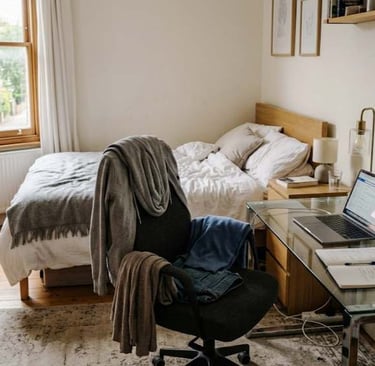
The post needs somewhere to go before it becomes a stack. The counter needs one clear stretch, not because minimalism is morally superior, but because making tea should not require excavation. The chair in the bedroom may need to become a chair again, or it may need a basket beside it, because apparently that is where clothes land in this house.
These are not elegant solutions. They are not transformations. They are small pieces of friction removed from places where the day already rubs, and that is usually enough to change the feel of a room.
Not completely. A real home keeps producing evidence. Cups return. Shoes drift. Someone puts batteries in a bowl meant for keys. The point is not to stop this, because stopping it would require a different species of life.
The useful question is narrower: which bit of the room makes the day harder every time you pass it?
Start there, and the improvement is less dramatic than people want from advice. No new identity. No perfect system. Just a hallway you can enter without turning sideways, a counter with room for a mug, a table that can take a plate without negotiation.
That is not a small thing.
A home does not have to look calm to feel workable. It only has to stop making the first move against you
The kind of everyday clutter that doesn’t look like much — but quietly sits on your mind all day.
© 2026 Oakwood Daily. All rights reserved.